Communication Compliance

Every message is consent-checked before it sends.

VehicleDesk keeps consent, suppression, contact points, policy, provider state, and blocked sends on one screen, so the shop reaches the right customers on the right channel every time.

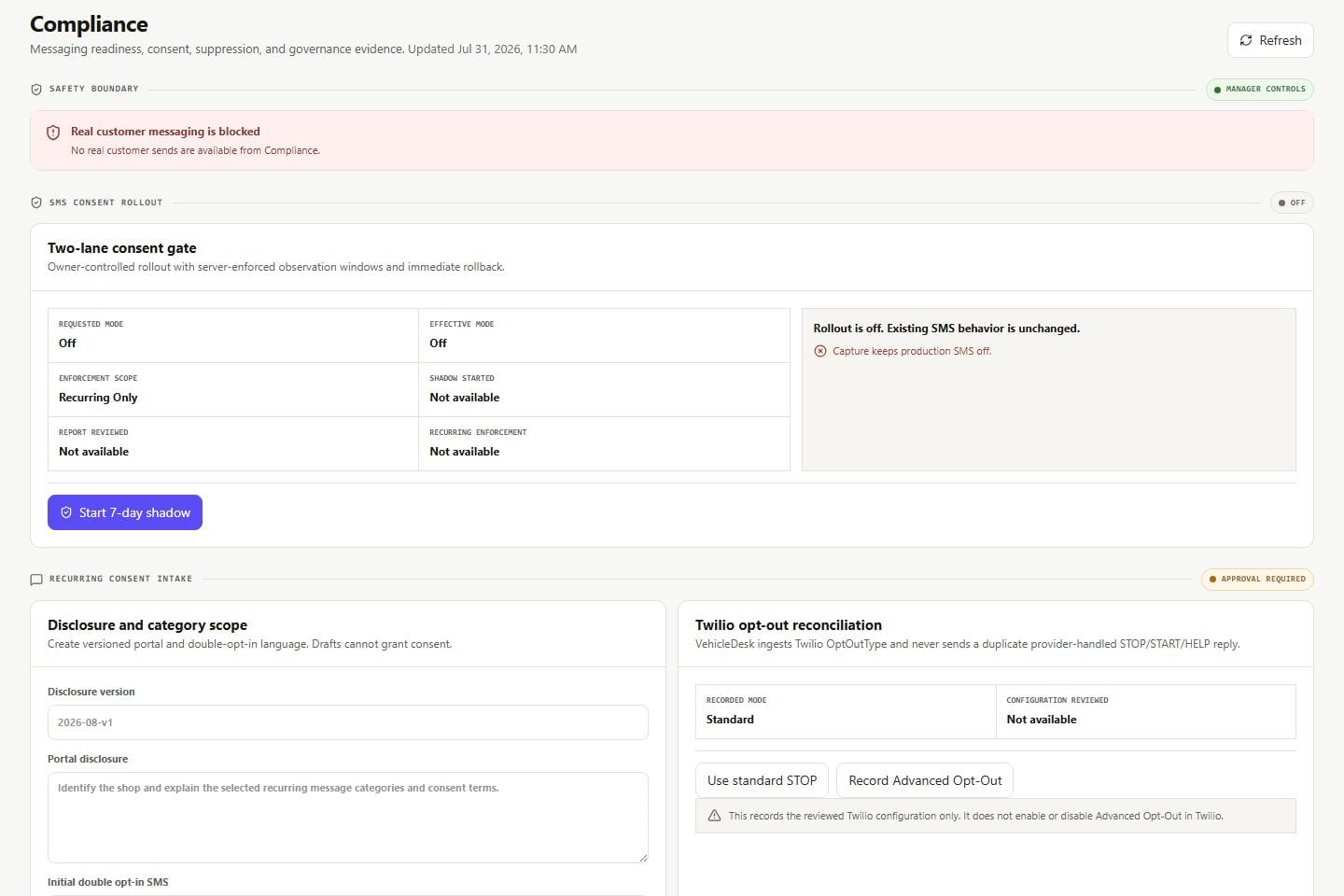
Compliance center Product screens shown with demo data.
VehicleDesk compliance workspace with consent, suppression, policy, and blocked-send evidence

Communication Compliance

Inspect the contact point, apply the policy, and see every send, draft, and block as its own state.

How it works

Inspect the contact point, apply policy, and keep every state distinct.

Policy gates run before every message. The team sees the eligibility result and the blocked reason before a customer hears from the shop.

01 / Inspect

Start with the actual contact point.

Phone and email records each carry their own provenance, consent, suppression, usability, and provider state.

  • Consent, suppression, and contact-point history
  • Phone and email tracked as distinct points
  • Provenance on the record
Compliance center Product screens shown with demo data.
VehicleDesk compliance workspace with consent, suppression, policy, and blocked-send evidence

02 / Evaluate

Apply policy gates before a message goes out.

Feature, shop, channel, workflow, consent, suppression, provider, and incident gates decide whether the send proceeds.

  • Policy rules with clear blocked reasons
  • Gates run before the message
  • Blocked reasons stay visible
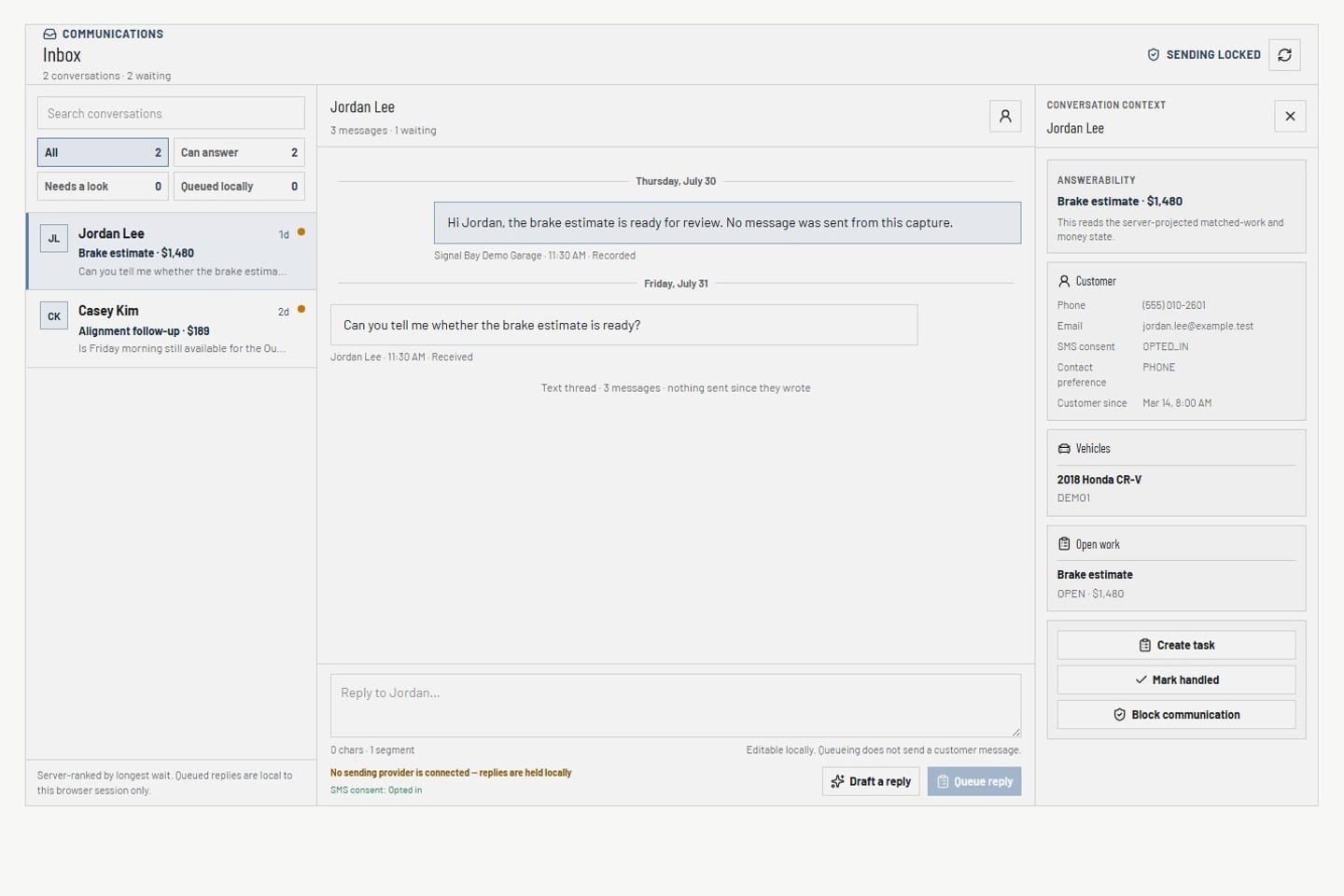
Communications Product screens shown with demo data.
VehicleDesk communications inbox with conversations, customer context, and delivery-safety state

03 / Evidence

Keep every communication state distinct.

Manual calls, drafts, tests, provider acceptance, delivery, failure, and opt-out each stay as their own recorded state.

  • Manual-call, draft, provider, and delivery states kept separate
  • Draft and delivery never merge
  • Opt-outs recorded the moment they arrive
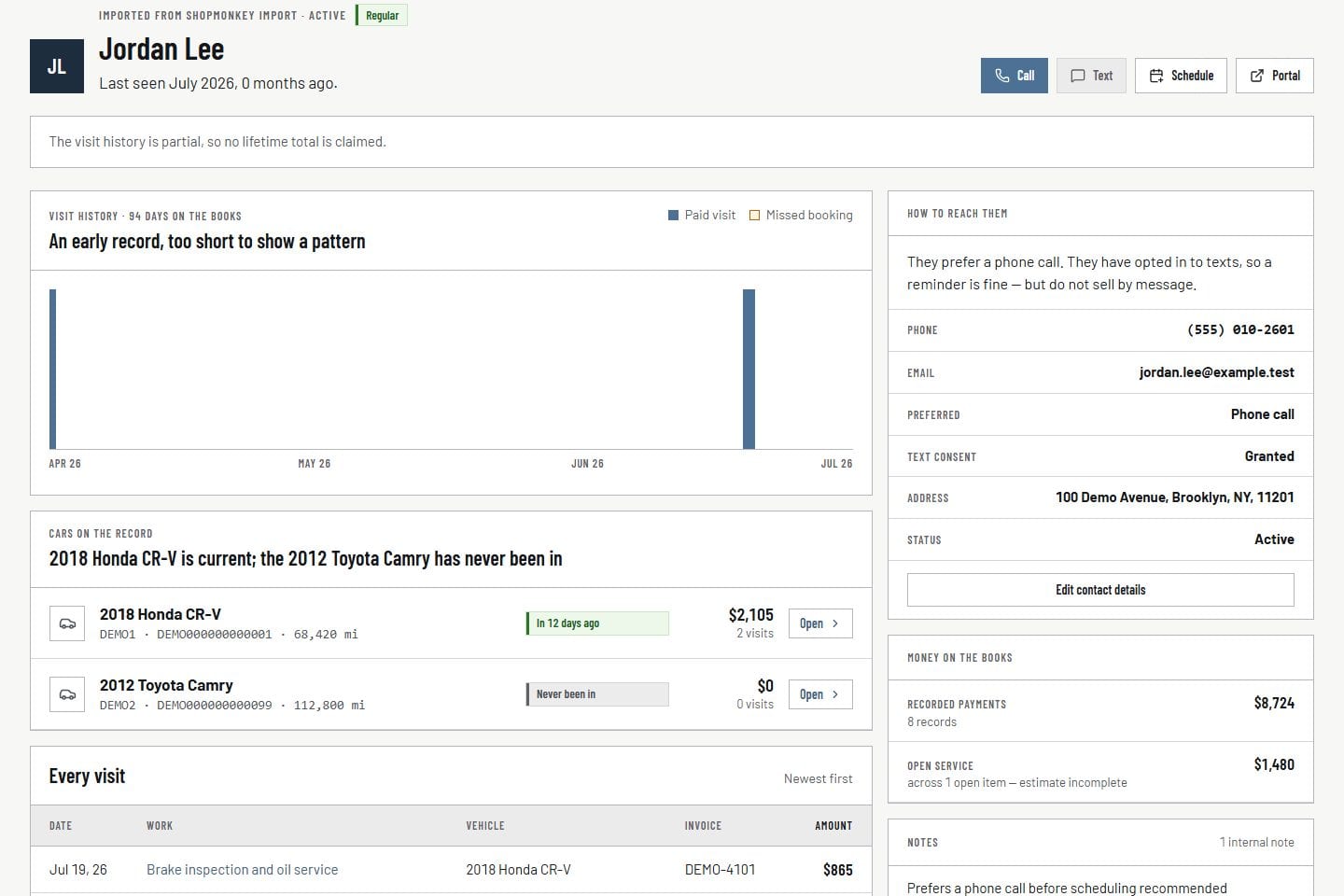
Customer record Product screens shown with demo data.
VehicleDesk relationship timeline with a customer, vehicles, service, and payment context

In practice

Eligibility first, then the conversation.

The team inspects the contact point, applies the policy, and sees draft, send, and blocked states side by side.

  1. 01

    Inspect

    Read consent, suppression, and provenance on the actual phone or email record.

  2. 02

    Evaluate

    Apply policy gates and read the blocked reason before the send.

  3. 03

    Evidence

    Keep draft, test, send, failure, and opt-out as separate states.

How it fits

VehicleDesk runs the day. Shopmonkey stays the system of record.

VehicleDesk runs the day and records every action. Your team makes the call to the customer, and Shopmonkey stays the system of record.

What the gates check and what the team sends

VehicleDesk

Contact eligibility on the record

Consent, suppression, policy, and blocked-send state sit on every contact point before outreach.

  • Contact-point history
  • Clear blocked reasons
  • Distinct draft, send, and failure states

Your team

The send

Eligibility runs on the record, and your team sends every message with the result in view.

  • Your team sends the message
  • Drafts stay drafts until sent
  • Blocked reasons stay visible

Connected work

Eligibility sits between the relationship and the send.

Eligibility checks use customer and contact-point context and govern every communication workflow, while the reason for follow-up lives in the queues.

  • Customer relationship

    Review the person, contact points, consent, notes, vehicles, service, and the reason for outreach.

    Open this workflow
  • Communication workflows

    Keep templates, inbox work, eligibility, and delivery state inside the same workflow.

    Open this workflow
  • Security and incident controls

    Review access, provider secrets, audit, and containment status.

    Open this workflow

Book a demo

See consent-checked messaging in your shop.

Bring one outreach path. We will inspect consent, suppression, blocked reasons, and the send.