Maintenance Roadmap

Turn vehicle history into the next maintenance conversation.

VehicleDesk connects vehicle ownership, mileage, service history, inspections, recommendations, and due context, so the team plans the next visit from the history the shop already has.

Maintenance roadmap Product screens shown with demo data.
VehicleDesk maintenance roadmap with vehicle, mileage, service, and recommendation evidence

Maintenance Roadmap

See what each vehicle needs next, with the history behind every recommendation.

How it works

Read the vehicle history, review due work, and plan the next step.

Mileage and service intervals organize what is due. The technician's inspection and a current quote set the job.

01 / Inspect

Read the vehicle record first.

Identifiers, ownership, mileage, service episodes, inspections, and open recommendations show the history behind each maintenance item.

  • Vehicle health, history, inspections, and recommendations
  • Ownership and identifiers on the same record
  • Open recommendations attached to the vehicle
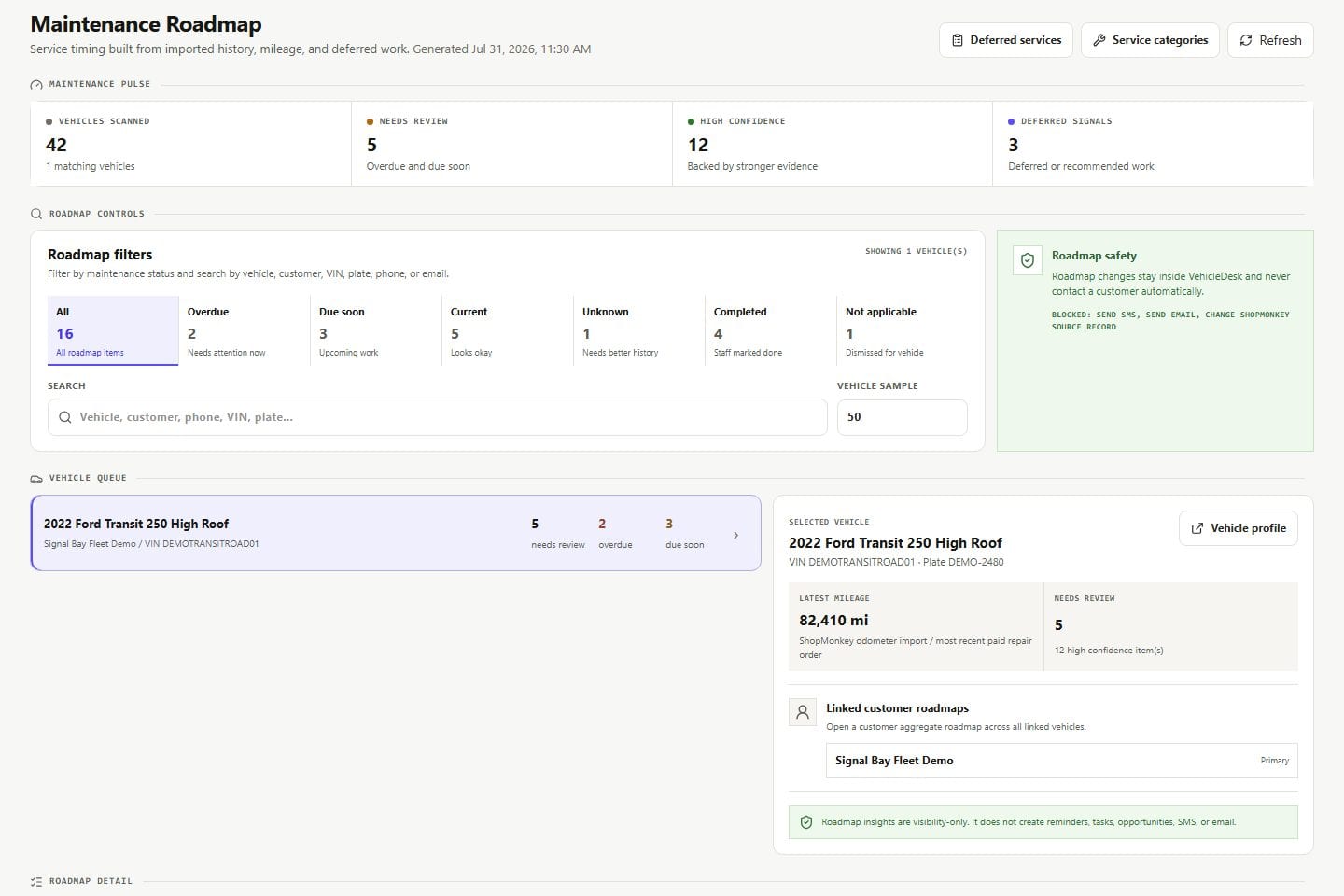
Maintenance roadmap Product screens shown with demo data.
VehicleDesk maintenance roadmap with vehicle, mileage, service, and recommendation evidence

02 / Evaluate

Use due context to plan the conversation.

Mileage and interval groupings show the team what is due before the customer is in the bay.

  • Maintenance groupings with mileage and due context
  • Due work built from history and intervals
  • Technician inspection sets the job
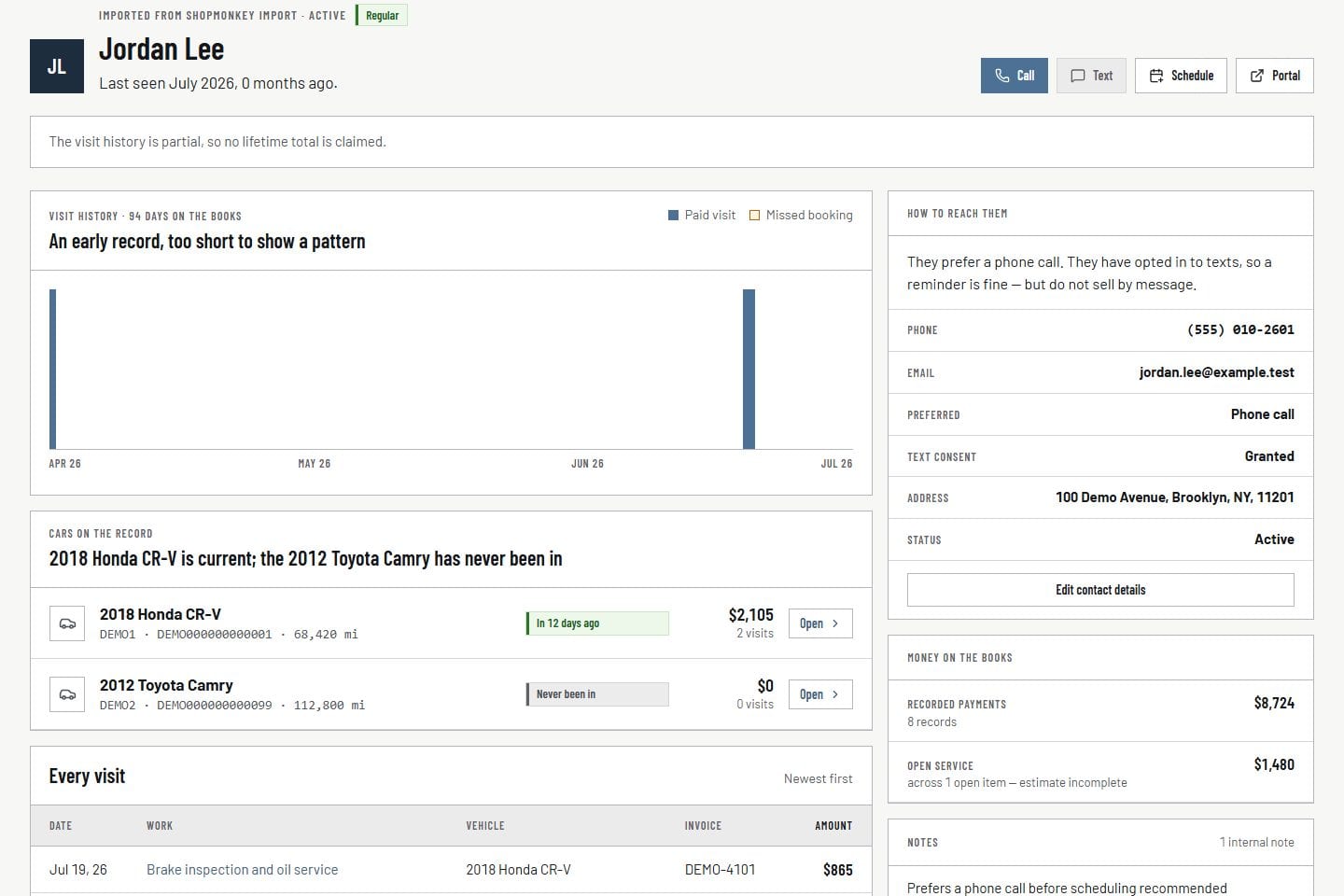
Customer and vehicle Product screens shown with demo data.
VehicleDesk relationship timeline with a customer, vehicles, service, and payment context

03 / Plan

Create the next action with the reason attached.

A task, reminder, or opportunity keeps the vehicle and the service reason together, so the shop follows up with the history in hand.

  • Tasks, reminders, and opportunities from the roadmap
  • Vehicle and service reason on the next step
  • Consent-checked outreach from the same record
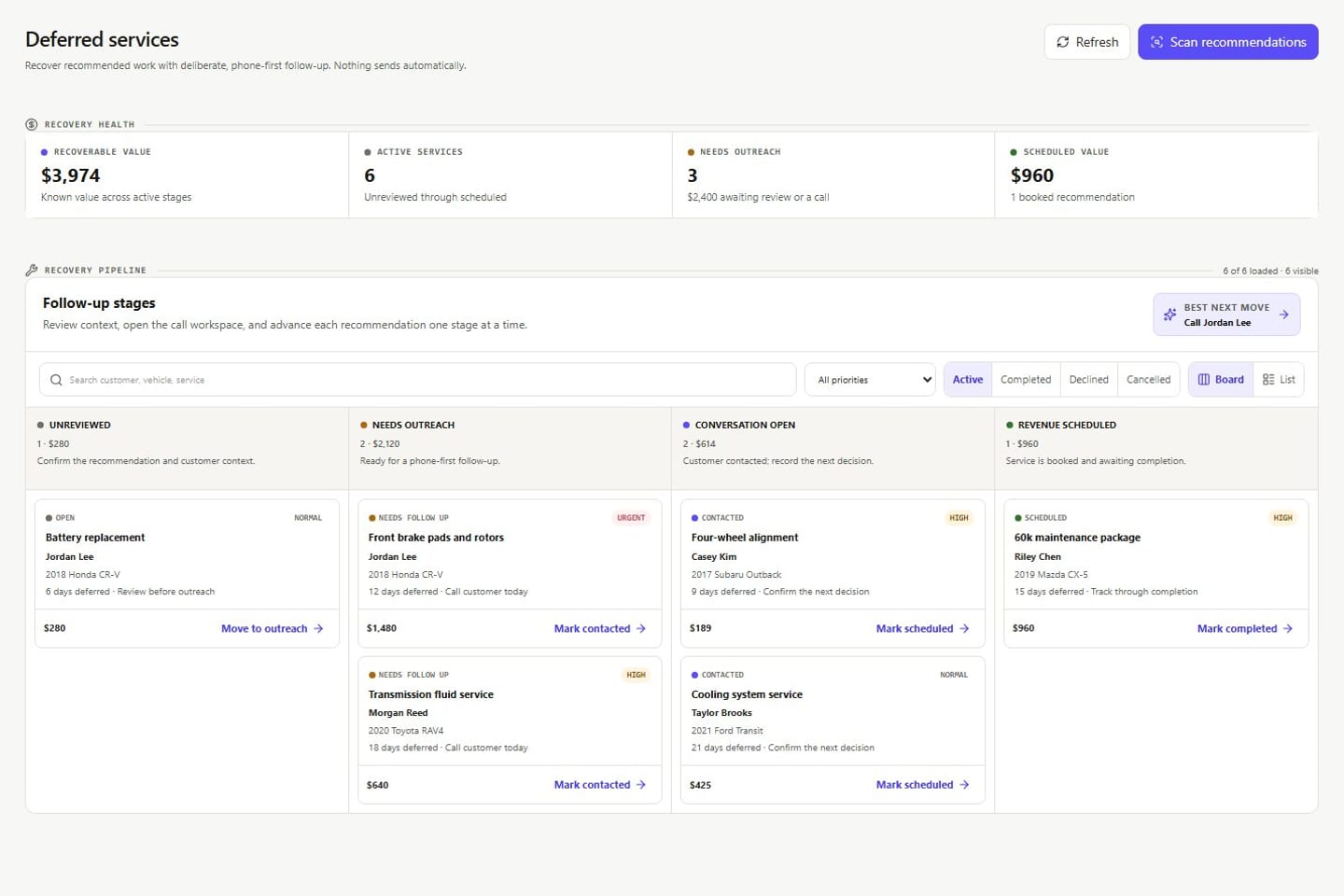
Deferred recovery Product screens shown with demo data.
VehicleDesk deferred-service pipeline rendered with service and customer data

In practice

History first, then the next step.

The team reads the vehicle, checks due work against the inspection, and creates follow-up the shop owns.

  1. 01

    Inspect

    Read ownership, mileage, service, and inspection history before the grouping.

  2. 02

    Evaluate

    Match due context to the inspection and the current quote.

  3. 03

    Plan

    Create a task, reminder, or opportunity with the vehicle reason attached.

How it fits

VehicleDesk runs the day. Shopmonkey stays the system of record.

VehicleDesk runs the day and records every action. Your team makes the call to the customer, and Shopmonkey stays the system of record.

The roadmap and the technician's call

VehicleDesk

Maintenance context, organized

The roadmap organizes vehicle history and due work so the team plans the next visit from the record.

  • History, mileage, and inspections
  • Due groupings by interval
  • Follow-up with the reason attached

Your team

The inspection sets the job

The roadmap organizes history and due context. The technician's inspection and a current quote define the work, and estimates publish to Shopmonkey from the same screen.

  • Technician inspection leads
  • Quote from your team
  • Estimates published to Shopmonkey

Connected work

Maintenance stays attached to the relationship and the work.

Roadmap context lives beside the customer and vehicle profile and feeds recovery and appointment work while the repair record stays in Shopmonkey.

  • Customer and vehicle profiles

    Trace maintenance context to ownership, mileage, service, inspections, notes, and open work.

    Open this workflow
  • Deferred recovery

    Move a recommendation into follow-up with the vehicle history intact.

    Open this workflow
  • Appointments

    Carry a customer-approved next step into scheduling and preparation.

    Open this workflow

Book a demo

Walk through a vehicle maintenance roadmap.

Bring one vehicle. We will read the history, the due context, and the next follow-up.